


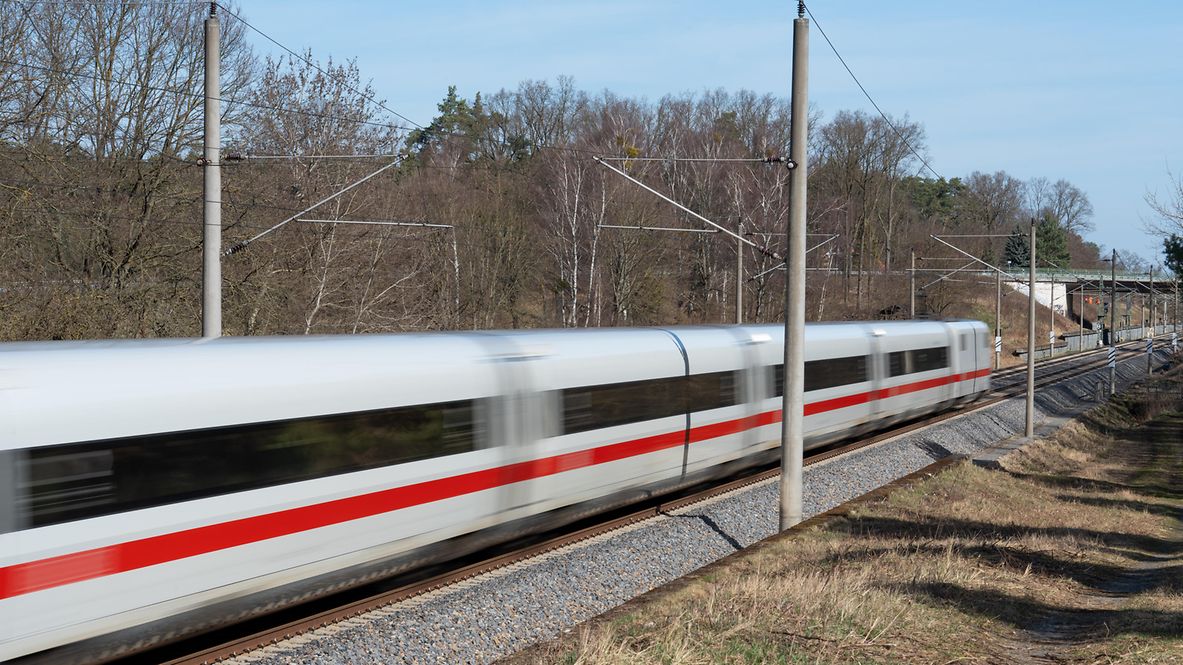
We’re excited to once again launch the DB Long-Distance Transport (DB Fernverkehr) program in 2026 – in close partnership with DB Fernverkehr. Over the course of 100 days, selected startups will have the opportunity to tailor their solutions to real-world challenges and test them live within the Deutsche Bahn environment.
- Access to DB experts and data
- Access to a curated network of coaching and mentoring experts
- EUR 25,000, no equity taken
- Coworking space at our office in Berlin Jannowitzbrücke
- A dedicated DB mindbox startup manager supporting you throughout the program
In total we are aiming to comply with legal regulations on public spending enabling us to procure up to EUR 400k from each successful applicant.
This is a unique opportunity to build the foundation for long-term collaboration and impactful projects with Deutsche Bahn Group – Europe’s largest mobility and infrastructure provider.
You have questions about the program?Join our weekly open Q&A session every Monday from 11:30–12:00 am (CEST). We’re happy to connect and answer any questions. Click here to dial in!
Current topics
DB Fernverkehr ensures mobility for millions of travelers across Germany and beyond. In 2026, we are looking for innovative startups that help us improve customer experience and transparency in challenging situations and core processes.
We are currently focusing on the following use cases:
01 - Digitalization of the taxi process
In disruption scenarios, DB Fernverkehr aims to improve the passenger experience by digitalizing the handling of alternative onward journeys. In cases where passengers are stranded due to disruptions within DB Fernverkehr’s responsibility and are unable to continue their journey, they are entitled to use a taxi as an alternative transport option. Current processes for taxi services are still largely manual, leading to inefficiencies, long waiting times, and suboptimal use of available transport capacity. We are looking for innovative solutions to enable a seamless, scalable, and customer-centric orchestration of taxi services.

02 - Smart occupancy insights for office buildings
Companies increasingly need transparency on how office space is actually used. We are looking for innovative solutions that provide privacy-compliant occupancy insights and help optimize workplace management, space utilization, and building operations.

Key questions for use case 01
Organizational questions
Can we apply if we only have references from another industry (e.g., aviation IRROPS, logistics)? Yes. References from other industries are sufficient to apply. Railway-specific references are not required.
Is DB looking for a software orchestration platform only, or also for a partner that operationally manages mobility providers and service delivery?DB is primarily looking for a partner, that delivers the technical solution. Existing relationships with mobility providers can be an advantage but are not required.
PoC setup and business scope
What is the current taxi volume handled by DB Fernverkehr (annually and during major disruption events)? The taxi volume in 2025 for DB Fernverkehr amounted to roughly €5.5 million, corresponding to approximately 5 million kilometres and around 32,000 taxi trips. It is difficult to determine how much volume is typically generated during disruption events, as every incident differs in scale and impact. However, on 29–30 May 2026, operations were significantly affected, resulting in a taxi volume of almost 100,000 kilometres within two days across Germany.
What are the most important success criteria for DB Fernverkehr?Key success criteria include reducing costs and passenger waiting times, lowering customer dissatisfaction in situations of disruption, maximizing automation, and achieving a high pooling rate wherever possible.
Will the PoC run with real stranded passengers in live operation or in a test environment? This will depend on the maturity and progress of the solution during the 100-day program. If feasible, a live test in a real operational setting may be explored. Alternatively, the solution may be evaluated through a realistic simulation of disruption scenarios.
Data, APIs and provider integration
What data and APIs will be available to participating startups? Data provided (Excel files):
- Taxi trips dataset as needed
- Pooling results: simulation outputs for ride-sharing with 4 and 8 passengers per vehicle
- Selected train operation datasets as needed: connections including delays, disruptions, and cancellations
- Booking data as needed
Potentially more data and APIs available as required.
Is it required to have direct contracts with taxi operators, or will DB Fernverkehr take over this part? No. Direct contracts with taxi operators are not required for participation. Existing partnerships may be beneficial but are not a prerequisite.
Technical requirements
Does the solution have to be fully browser-based? Yes. The use case explicitly calls for a simple browser-based self-service experience that can be accessed without installing a dedicated application.
Is passenger pooling a mandatory requirement? Yes. The solution should be able to identify passengers with compatible routes and assign them to shared rides whenever possible.
Do startups need to verify passengers’ individual claims against taxi providers or handle billing directly? No. The startup's role is to orchestrate the mobility process. Claim verification, reimbursement, and billing remain the responsibility of DB.
Key questions for use case 02
Targeted analytics
Which analyses should be possible with the solution? The proposed solution should provide occupancy data in an aggregated, privacy-compliant manner. Of particular interest are analyses by building, floor, room type, and temporal patterns, such as weekdays or times of day. In addition, it would be valuable to determine whether different user groups, such as employees with assigned workstations and visitors, can be analyzed separately without allowing conclusions to be drawn about individual persons.
Timeline
09. Aug. 2026 – Application deadline
Last day to apply for the program (eod).
25. Aug. 2026 – Announcement of candidates
Invitation of selected teams.
09. Sep. 2025 – Selection day
Pitch your solution live on stage to an expert jury and audience.
13. Oct. 2026 – Start of program
Kick-off of the 100-day Proof-of-Concept (PoC), including testing and development in collaboration with DB.
February 2027 – End of program
End of 100-day Proof-of-Concept (PoC) and presentation of results is expected to take place in February 2027 (tbd).
 Go
Go